01
Read what is underneath
We dig in, grade, and prep the subgrade to suit whatever the lot is actually on, conditioning expansive clay or leveling across caliche and rock, so the pad bears flat and does not settle or lift under load.
A pad sized to what actually lands on it and based on the ground beneath. We read the dirt, set steel for the weight up top and whatever travels below, then cure it through the dry heat.
Credibility comes from how it's built, not from promises. Here's the order of operations on every concrete pads & slabs job.
We dig in, grade, and prep the subgrade to suit whatever the lot is actually on, conditioning expansive clay or leveling across caliche and rock, so the pad bears flat and does not settle or lift under load.
How thick the slab runs follows what sits on it. The pad under a garden shed and the floor under a shop full of vehicles are not the same pour.
We match the reinforcement to the job, from light mesh under small pads up to a rebar grid for heavy loads, and that steel also carries across whatever the soil below is doing through the seasons.
On enclosed or finished slabs we run a vapor barrier to keep ground moisture from climbing up through the concrete, which matters on clay that stays wet after a soaking spell.
We place a mix suited to the load, saw the control joints, and bring the cure along so the dry South Texas sun does not hurry the set.
Most contractors vanish after the deposit. We pick up the phone, show up when we say, and stand behind the work after the truck leaves. The follow-through is the difference.
A foreman we know runs your job and a vetted crew does the work, managed by Lucky's, one company accountable from the first call to the final walkthrough.
COI and lien waivers on file before we break ground. The documentation that lets commercial clients pay and gives homeowners peace of mind.
Prepped subgrade, reinforced and mixed to spec for the job, and proper curing. We build credibility through the process, not promises. On concrete pads & slabs, that starts with read what is underneath.
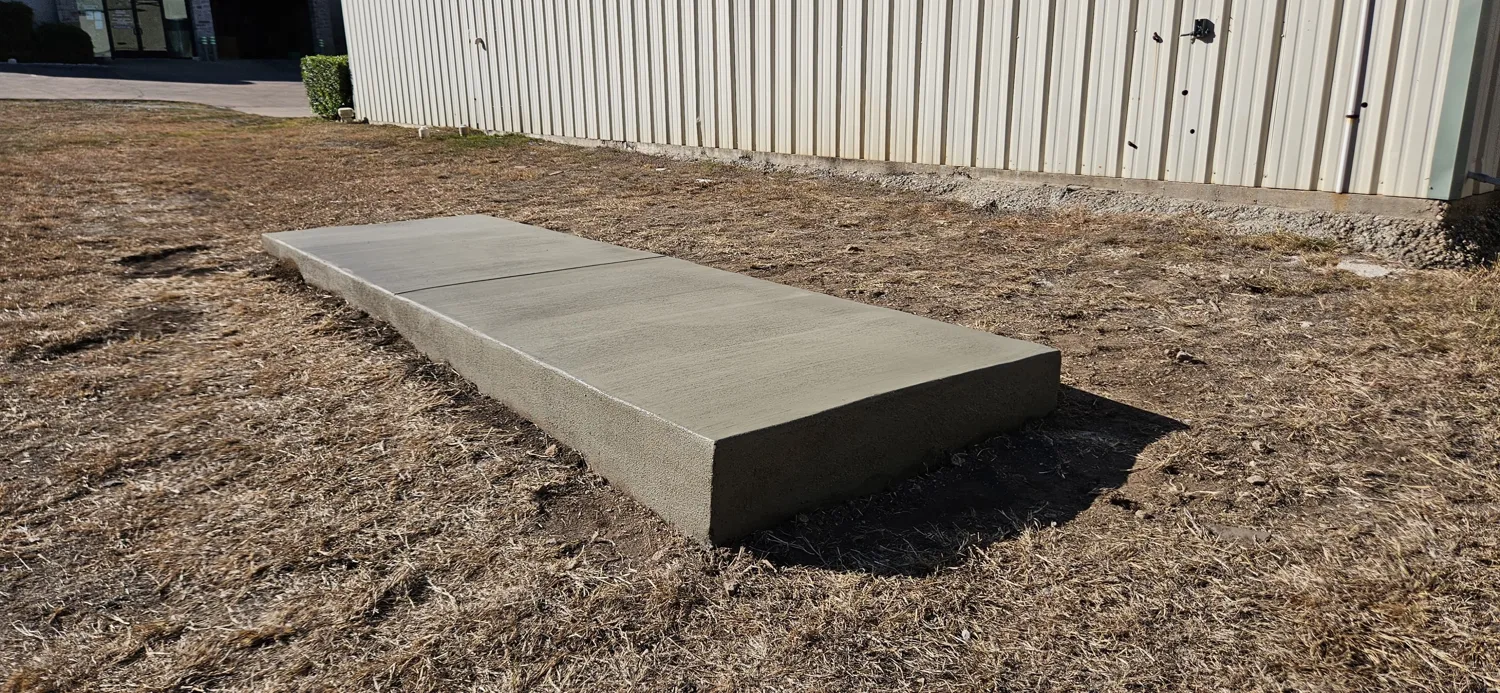
Pads and slabs here price off the load and the soil: a mix tuned to the use, the reinforcement, and a base prepped for whatever the lot is on. For a starting range, most fall around $7 to $13 a square foot depending on depth and whether a vapor barrier comes into it. We scope and quote it around the weight it has to hold.
It tracks the load. A shed pad is lighter duty than a garage or shop floor under vehicles and gear, so we set depth and steel to your real use and account for the ground below, clay or rock.
Yes. Those are heavy, concentrated loads, so we step up the depth and the steel and tune the mix to the weight. A hot tub also wants a level, steady base that will not shift as the soil swells and dries. Tell us the gear and we build the pad to carry it.
On enclosed or finished slabs, usually yes; it stops ground moisture from creeping up through the concrete, which is worth the step on clay that holds water after a wet stretch. We make that call off what the slab is for.
Some do, depending on size, spot, and use, and the rules shift across the city and the surrounding county jurisdictions. On the north side, work over the Edwards Aquifer recharge zone can pull in added impervious-cover and drainage requirements, so we flag a likely permit or review at the start rather than late.
Concrete keeps gaining strength after it looks done, and a dry-heat pour wants a true cure rather than a quick bake. You get a clear load-by date tied to your own pour.
You'll hear back from a real person, usually the same day. No call center, no runaround, no chasing us down.
Booking up fast this season. Or call (210) 940-1600